Items to consider for short rides and longer treks
Hot Weather (+25° to +35°)
Lightweight and breathable fabrics
Look for a breathable (but durable) and odour-resistant fabric that will last multiple days without washing. Wool is likely too hot, so moisture-wicking synthetic materials or light cotton shirts can be good option. Opt for lighter shirt colours to help stay cool when there is no breeze.
Sun Protection
A lightweight scarf, shirt sleeves that extend down past your wrists, and gloves can all help reduce the risk of a serious sunburn. Remember to keep sunscreen/suncream on you if you are riding all day.
Removable Layers
A key element in mixed weather riding – removable layers are also helpful in hot weather. You can fold up the extra garment and tuck it into your saddle bag.
Pockets & Bags
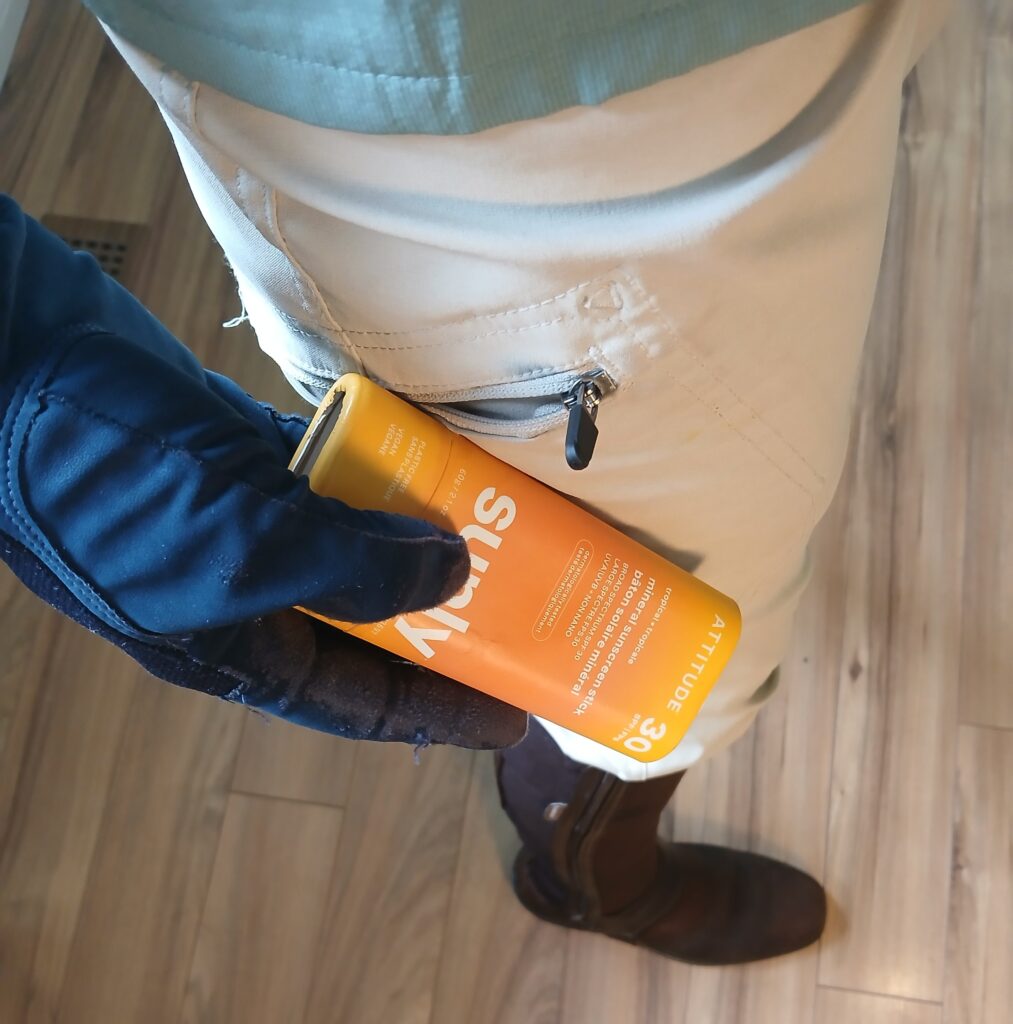
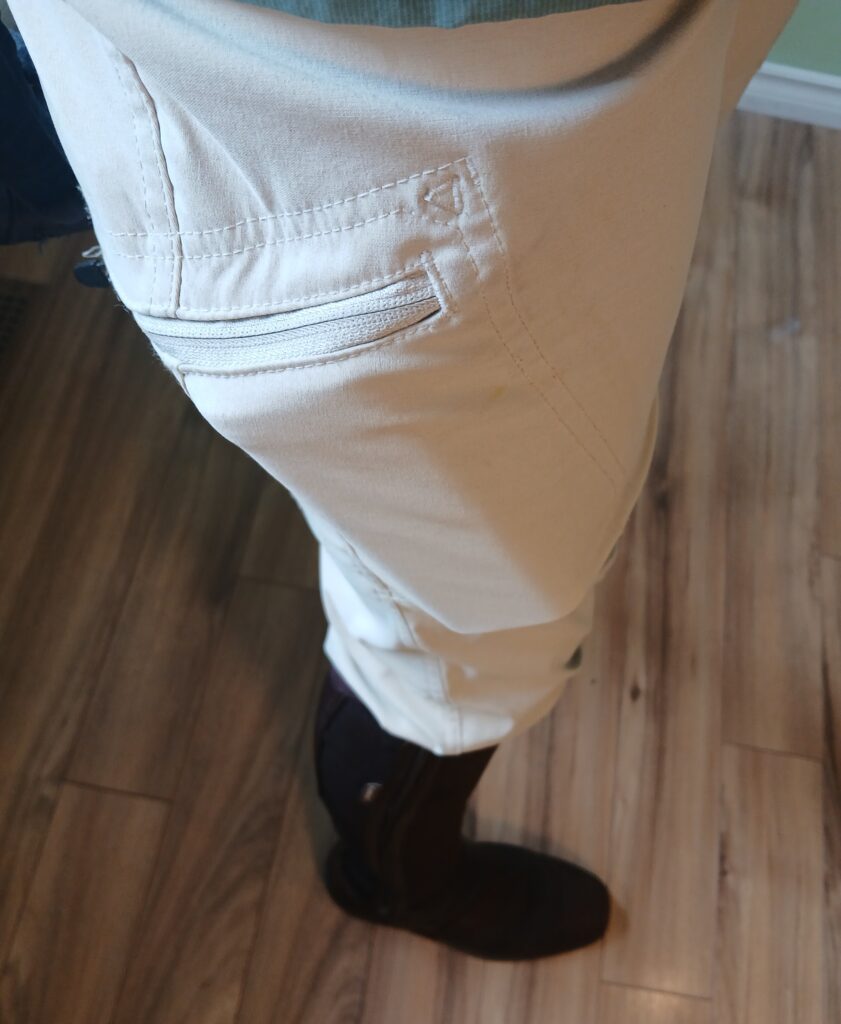
Look for clothes with zippered or Velcro pockets, so you can bring sunscreen and apply on-the-go! You may be riding for multiple hours at a time without stopping, so having some within reach is recommended.
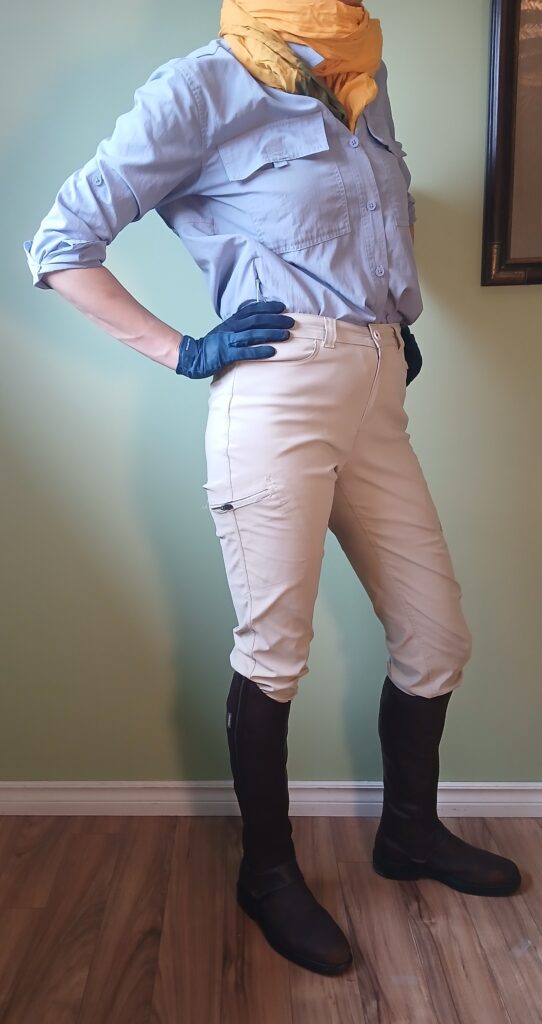
Light colours, a scarf to protect the neck, and plenty of pockets for storing sunscreen
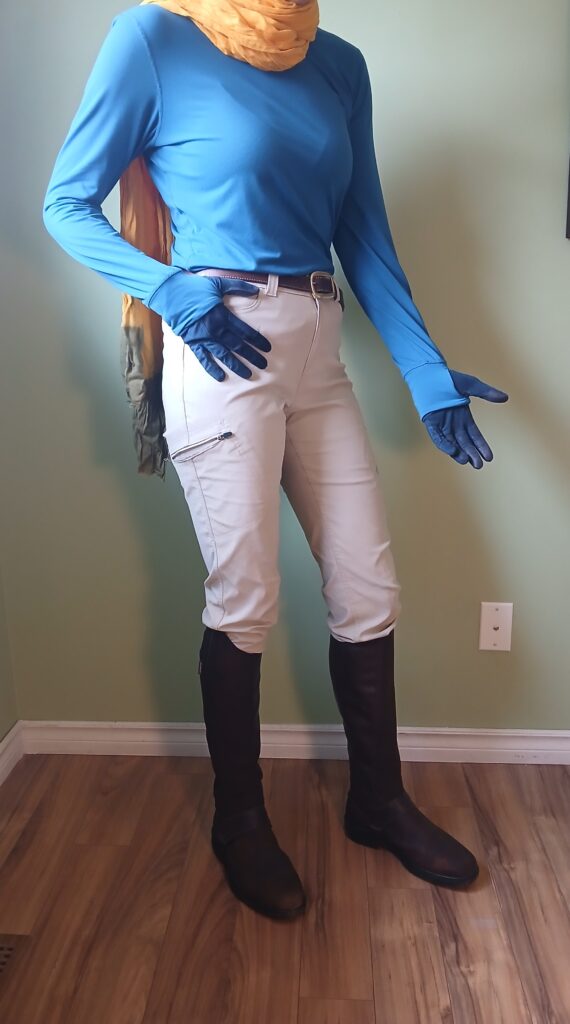
A long-sleeved shirt with thumb holes to completely cover your wrists while riding
Mild Weather (+10° to +24°)
Athletic Fabric
Your clothing will really come down to that season’s/day’s weather, but regular riding breeches or hiking pants are generally comfortable in this temperature range.
Sun Protection
As with hot weather riding, always have some sunscreen with you for longer outings.
Rain and Windproof gear
Waterproof pants and a rain jacket can protect you from biting winds (and also rain).
Removable Layers
Weather can change quickly in certain areas. Being able to easily remove a layer or add one on can make your day a lot more comfortable.
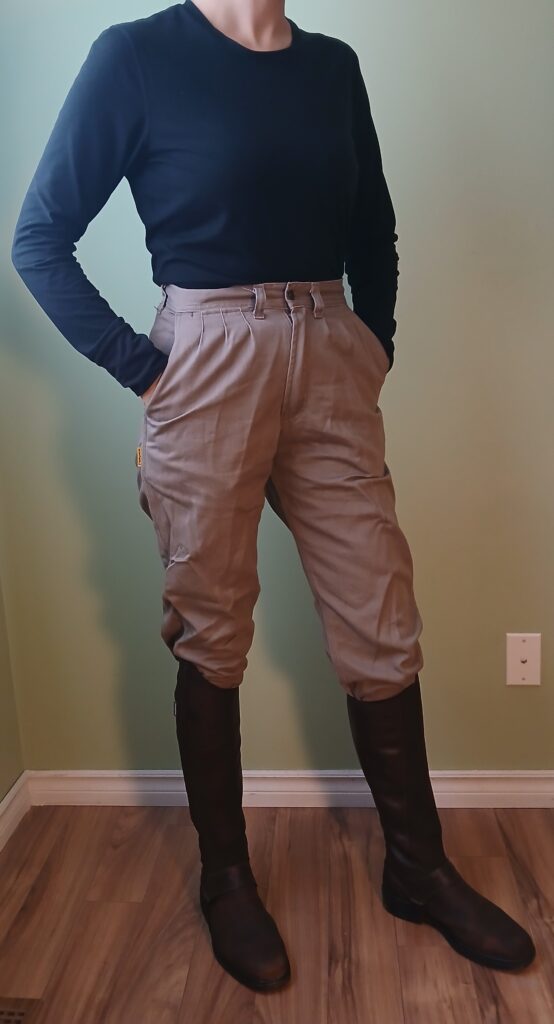
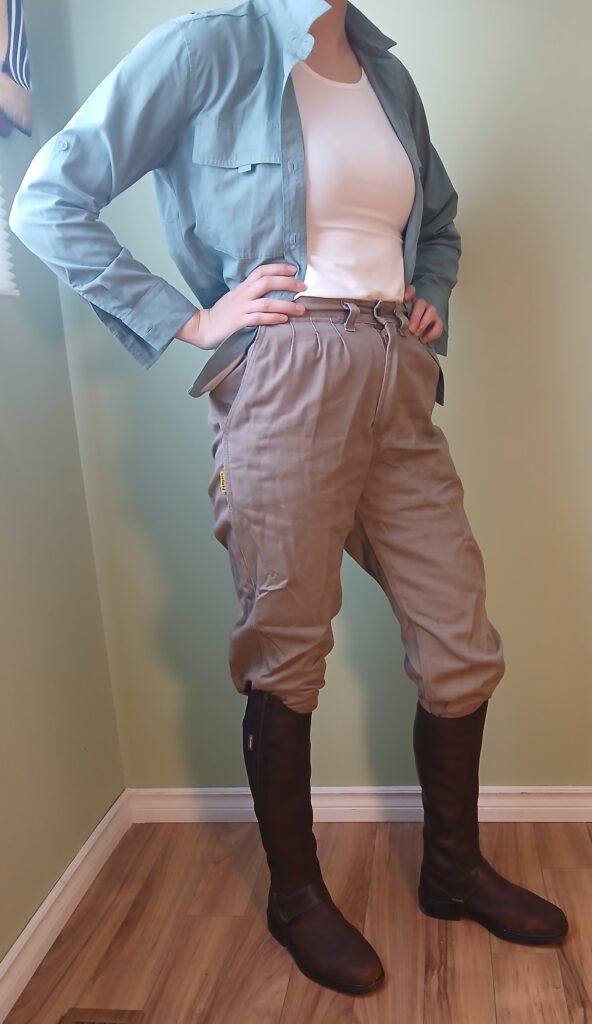
A dark shirt with beige bombachas de campo
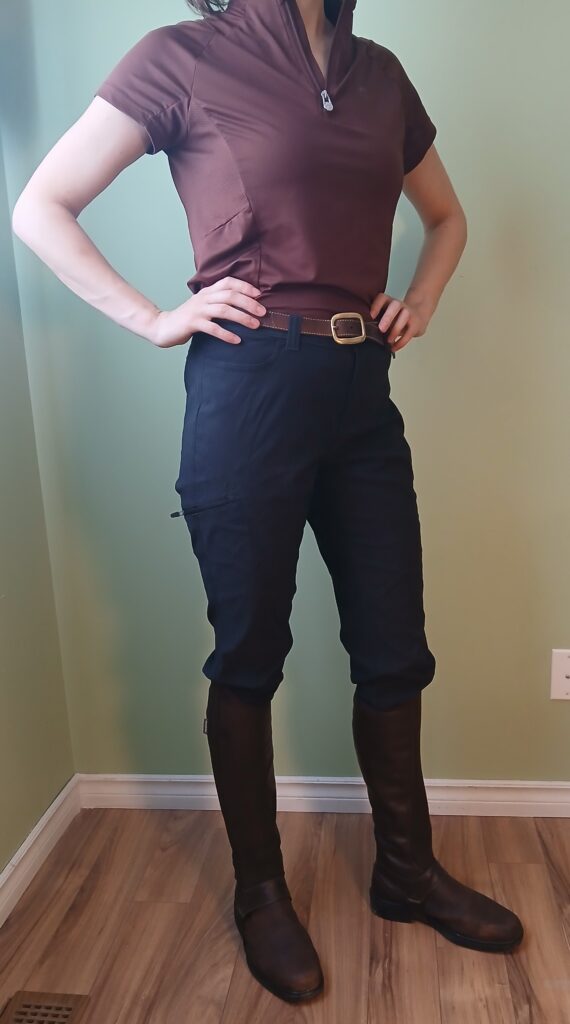
Dark water-resistant hiking pants with a brown riding shirt
A light shirt layered under the button-up
Cold Weather (-20°to +9°)
Wool clothing
Thick wool sweaters or thin merino base layers will help keep you warm in the coldest temperatures. Wool socks make a big difference when the temperature drops below 0°.
Sun Protection (for eyes)
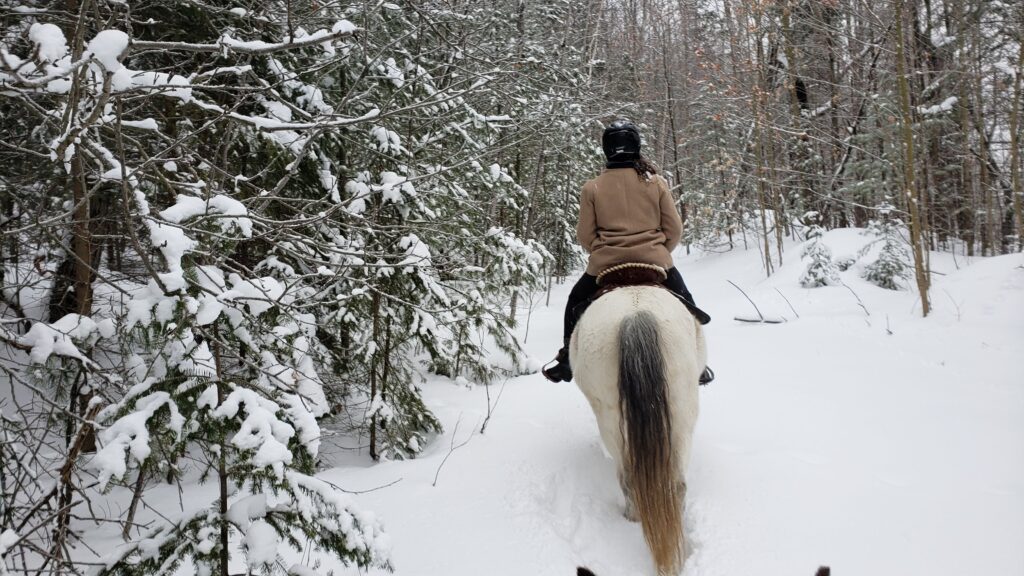
Is there snow where you are riding? The snow can reflect light so intensely that it is difficult to see. Don’t skip the sunglasses! Face sunscreen is also very helpful in bright, snowy conditions.
Neck warmer
A tube scarf is great for keeping your neck warm, without the risk of it coming loose and falling off. A second thin tube scarf (or headband) can be stretched around your head and ears to protect them from the cold (and still fits under a helmet).
Protect your extremities
Good quality winter riding gloves that allow your fingers to move without them going numb (in very cold weather). Purpose-made winter riding boots add extra warmth for your toes.
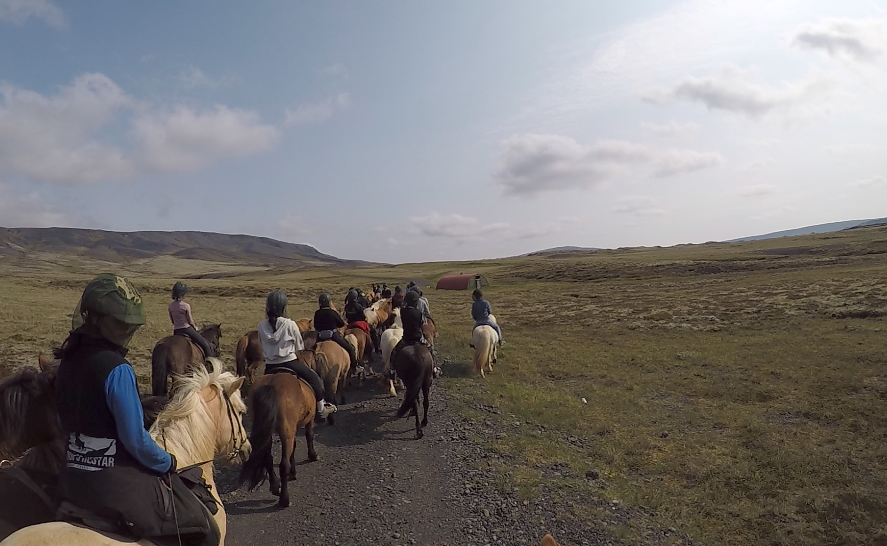
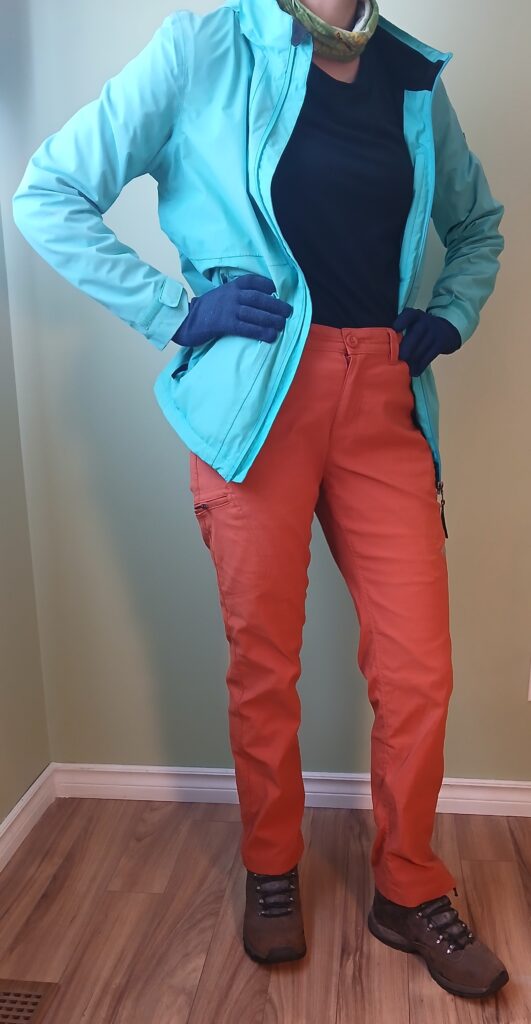
For Iceland – synthetic hiking boots Waterproof jacket, water-resistant pants, and a tube scarf to protect against bugs